Federal vs. State Benefits: 2026 Aid for Families

Anúncios
Understanding the landscape of federal and state benefits in 2026 is crucial for a family of four seeking an average of $1,200 annually, as both levels of government offer distinct programs and aid structures.
Anúncios
Navigating the complex world of government assistance can be a daunting task, especially when trying to understand the differences between federal and state programs. For a family of four aiming for an average of $1,200 annually in support, knowing where to look and what to expect is essential. This article provides a detailed exploration, comparing federal and state benefits: which programs offer the most aid in 2026 for a family of four, averaging $1,200 annually, helping you make informed decisions about the resources available to you.
Understanding the basics of federal and state benefits
Before diving into specific programs, it’s important to grasp the fundamental distinction between federal and state benefits. Federal programs are initiated and funded by the U.S. government, often providing a baseline level of support across all states. State programs, on the other hand, are developed and administered by individual states, often supplementing federal aid or addressing unique local needs. This dual system can create a patchwork of assistance, making it challenging for families to identify all available resources without proper guidance.
Anúncios
The interplay between federal and state mandates means that while some programs are entirely federal, many others are state-administered with federal funding and guidelines. This often leads to variations in eligibility criteria, benefit amounts, and application processes from one state to another. Understanding this dynamic is the first step in effectively seeking assistance for your family.
Federal programs: the national safety net
Federal programs form the backbone of the nation’s social safety net, designed to provide essential support regardless of where you live. These programs typically have broad eligibility requirements and aim to address widespread needs such as food security, healthcare, and housing assistance. Their uniform nature ensures a minimum standard of living for eligible individuals and families across the country.
- SNAP (Supplemental Nutrition Assistance Program): Helps low-income individuals and families purchase nutritious food.
- Medicaid: Provides health coverage to eligible low-income adults, children, pregnant women, elderly adults, and people with disabilities.
- Housing Choice Vouchers (Section 8): Assists very low-income families, the elderly, and the disabled to afford decent, safe, and sanitary housing in the private market.
These federal initiatives often set the stage, with states then having the option to expand upon them or implement their own complementary programs. For a family of four, these federal programs can represent a significant portion of the potential aid, providing a foundational level of support that can be crucial for financial stability.
Key federal programs offering aid in 2026
In 2026, several federal programs continue to be primary sources of aid for families across the United States. These programs are vital for covering basic necessities and ensuring a safety net for those experiencing financial hardship. Eligibility criteria and benefit amounts are often adjusted annually to account for inflation and changing economic conditions, making it important to stay updated.
These programs are not just about direct financial payments; they encompass a wide range of support, from food assistance to affordable housing and healthcare. Understanding the scope of each program helps families identify which ones align best with their specific needs, thereby maximizing their potential for aid.
Supplemental Nutrition Assistance Program (SNAP)
SNAP is designed to combat food insecurity by providing eligible low-income individuals and families with benefits to purchase groceries. The amount of aid a family receives depends on their income, household size, and certain expenses. For a family of four, SNAP benefits can significantly reduce monthly food costs, freeing up income for other essential needs.
The program is administered by states but funded federally, meaning while the core rules are federal, specific state interpretations or additional support can exist. This makes it a crucial program for families struggling to put food on the table, offering a consistent form of assistance nationwide.
Medicaid and CHIP: healthcare access
Medicaid and the Children’s Health Insurance Program (CHIP) are essential federal-state partnerships that provide affordable healthcare coverage. Medicaid primarily serves low-income adults and children, while CHIP targets children and pregnant women in families who earn too much for Medicaid but cannot afford private insurance. For a family of four, access to affordable healthcare is paramount, preventing medical emergencies from turning into financial disasters.
These programs ensure that health is not a luxury, but a right, providing comprehensive coverage that includes doctor visits, hospital care, prescription drugs, and more. The specific income thresholds for eligibility can vary by state, highlighting the blend of federal guidelines and state implementation.
Significant state-specific benefit programs in 2026
While federal programs provide a foundation, individual states often offer their own unique benefit programs, or enhance federal ones, to cater to the specific needs of their residents. These state-specific initiatives can be crucial in bridging gaps left by federal programs or providing more tailored support based on local economic conditions and priorities. For a family of four, exploring state-level aid can significantly increase the total amount of assistance received.
State programs vary widely, covering areas such as rental assistance, utility aid, childcare subsidies, and educational support. Understanding these localized opportunities requires research into your specific state’s offerings, as what’s available in one state may not be in another. This diversity underscores the importance of a comprehensive search for benefits.
Temporary Assistance for Needy Families (TANF)
TANF is a federal block grant that provides states with funds to create and administer their own assistance programs for needy families. While federally funded, each state has considerable flexibility in how it designs and implements its TANF program. This means benefit amounts, eligibility rules, and program requirements can differ significantly from state to state.
For a family of four, TANF can offer cash assistance, job training, and childcare support, among other services. The variability in state implementation means that some states may offer more generous or comprehensive TANF programs than others, directly impacting the level of aid a family can receive.
State-funded housing and utility assistance
Beyond federal housing programs, many states and local municipalities offer their own rental assistance, utility bill help, and homelessness prevention programs. These can be particularly valuable in areas with high costs of living or during extreme weather conditions. These programs often have distinct eligibility criteria and application processes.
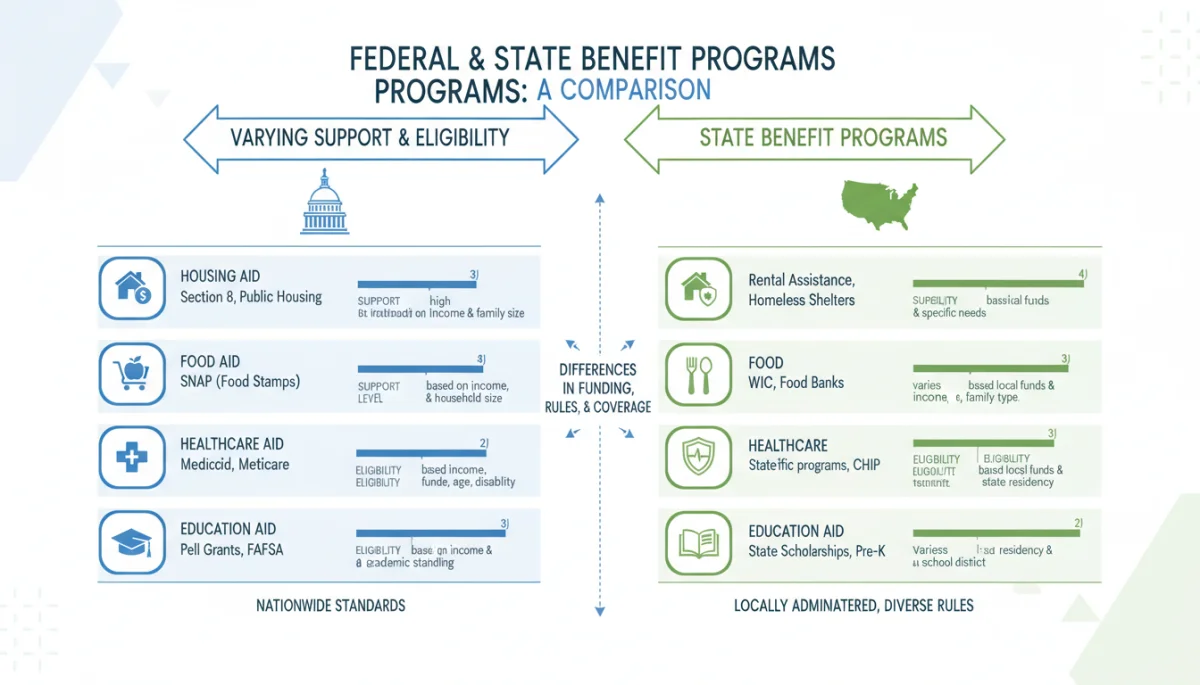
Some states might offer emergency rental assistance, while others focus on long-term housing solutions or energy assistance programs to help with heating and cooling costs. For a family of four, these state-specific programs can provide critical relief, preventing housing instability and ensuring access to essential utilities.
Comparing aid levels: federal vs. state for a family of four
When assessing which level of government offers the most aid, it’s not always a clear-cut answer. Often, the most significant support comes from a combination of federal and state programs, working in tandem to address various needs. For a family of four aiming for an average of $1,200 annually, understanding the cumulative effect of these programs is key.
Federal programs typically provide a broad, foundational level of support that is consistent across all states. However, states with more robust social safety nets or higher costs of living may offer additional or enhanced benefits that significantly increase the total aid package. This makes the state of residence a crucial factor in the overall amount of assistance a family can expect.
The combined impact of federal and state support
Consider a scenario where a family of four qualifies for federal SNAP benefits, Medicaid, and Section 8 housing assistance. These federal programs alone can provide substantial relief in terms of food, healthcare, and housing costs. If that same family resides in a state that also offers state-funded childcare subsidies, utility assistance, and a more generous TANF program, their total aid package could be significantly higher.
- SNAP and State Food Programs: Federal SNAP provides baseline, while some states offer additional food assistance for specific demographics or emergencies.
- Medicaid & CHIP Expansion: Federal programs set the minimum, but many states have expanded eligibility, offering broader coverage.
- Housing Subsidies: Federal Section 8 is significant, complemented by state-specific rental and homelessness prevention programs.
The synergy between federal and state benefits means that families should not exclusively focus on one level of government. A holistic approach, exploring all available programs at both the federal and state levels, is the most effective strategy for maximizing aid. This integrated approach ensures that families can tap into every possible resource to meet their financial and personal needs.
Navigating eligibility and application processes in 2026
Understanding the eligibility criteria and application processes for federal and state benefits can be as challenging as identifying the programs themselves. Each program, whether federal or state, has its own set of rules regarding income limits, household size, residency requirements, and documentation. For a family of four, meticulously navigating these details is crucial to successfully securing aid in 2026.
The application process often involves submitting detailed financial information, proof of residency, and identification for all household members. It’s not uncommon for programs to require regular recertification, meaning families must periodically provide updated information to continue receiving benefits. Staying organized and proactive is essential for maintaining eligibility and avoiding interruptions in aid.
Common eligibility factors
While specific criteria vary, several common factors influence eligibility for most benefit programs. These include:
- Income Level: Most programs have strict income thresholds, often based on a percentage of the Federal Poverty Level (FPL).
- Household Size: The number of individuals in your household directly impacts income limits and benefit calculations.
- Residency Status: Applicants typically need to prove legal residency in the state where they are applying.
- Assets: Some programs consider assets (like savings accounts or property) in addition to income.
Understanding these common factors can help a family of four pre-assess their likelihood of eligibility before investing time in lengthy application processes. Many government websites offer pre-screening tools or detailed guides to help applicants determine if they meet the basic requirements. This initial research can save considerable time and effort.
Strategies for maximizing benefits for a family of four
For a family of four, maximizing the total amount of aid from federal and state programs requires a strategic approach. It’s not just about applying for one or two programs; it’s about understanding the full ecosystem of available support and how different benefits can complement each other. The goal is to create a comprehensive safety net that addresses various needs, potentially surpassing the average $1,200 annually.
One effective strategy is to utilize online benefit calculators and resource finders, many of which are provided by government agencies or non-profit organizations. These tools can help families identify programs they might be eligible for based on their specific demographics and financial situation. Proactive research and diligent application are key to unlocking the full potential of available aid.
Holistic benefit search and application
Instead of focusing on just one type of aid, consider the entire spectrum of your family’s needs: food, housing, healthcare, childcare, and even educational support. Many states have integrated portals or agencies that can help streamline the application process for multiple programs simultaneously. This can significantly reduce the administrative burden on families.
Engaging with local community organizations and social workers can also be incredibly beneficial. These professionals often have in-depth knowledge of both federal and state programs, including lesser-known local initiatives, and can provide personalized guidance through the application process. Their expertise can be invaluable in navigating complex systems and ensuring all potential avenues for aid are explored.
Future outlook: changes and trends in 2026
The landscape of federal and state benefits is not static; it evolves in response to economic shifts, legislative changes, and societal needs. For 2026, families should be aware of potential trends and updates that could impact eligibility, benefit amounts, and program availability. Staying informed about these changes is crucial for continuously optimizing aid for a family of four.
Expect continued discussions around inflation adjustments for benefit levels, potential expansions or contractions of certain programs based on federal budgets, and state-level initiatives responding to local economic conditions. Technology will also play an increasing role in benefit administration, with more online application options and digital resource tools becoming prevalent.
Anticipated policy shifts and economic impacts
Policy discussions at both federal and state levels often center on strengthening the social safety net, particularly in response to economic uncertainties. This could mean increased funding for existing programs, the introduction of new initiatives, or adjustments to eligibility criteria to reach more vulnerable populations. Families should monitor legislative updates and news from relevant government agencies.
Economic indicators, such as unemployment rates and cost of living indices, will also influence how benefits are structured and allocated. States experiencing higher poverty rates or significant demographic shifts might introduce more targeted programs or increase benefit levels to address acute needs. Being proactive in understanding these trends will empower families to adapt and seek the most relevant aid.
| Key Benefit Area | Federal vs. State Overview |
|---|---|
| Food Assistance | SNAP (Federal) provides baseline; states may offer supplementary food programs. |
| Healthcare | Medicaid/CHIP (Federal-State partnership) ensures coverage, with state eligibility variations. |
| Housing Support | Section 8 (Federal) offers significant aid; states often have additional rental assistance. |
| Cash Aid/Welfare | TANF (Federal block grant) allows states significant flexibility in program design and aid levels. |
Frequently asked questions about federal and state benefits
Federal benefits are funded and regulated by the U.S. government, providing a nationwide baseline. State benefits are administered by individual states, often supplementing federal aid or addressing specific local needs with varying eligibility and amounts.
Families can use online benefit calculators provided by government agencies or non-profits. Consulting with local social workers or community organizations can also offer personalized guidance and help streamline applications for various federal and state programs simultaneously.
Not necessarily. Federal programs provide a consistent foundational support. However, states with robust social safety nets or higher costs of living often offer additional or enhanced benefits, leading to a higher cumulative aid package when combined with federal programs.
Key federal programs include the Supplemental Nutrition Assistance Program (SNAP) for food, Medicaid and CHIP for healthcare, and Housing Choice Vouchers (Section 8) for housing assistance. These form the core of federal aid for families.
Eligibility criteria and benefit amounts for both federal and state programs are typically reviewed and adjusted annually. These changes often account for inflation, economic conditions, and legislative updates, so staying informed is crucial for families receiving aid.
Conclusion
In conclusion, for a family of four seeking an average of $1,200 annually in support in 2026, the most effective strategy involves a comprehensive understanding and utilization of both federal and state benefit programs. While federal initiatives provide a critical baseline for essential needs like food, healthcare, and housing, state-specific programs often offer vital supplementary aid tailored to local conditions. Maximizing benefits requires diligent research into eligibility criteria, proactive application, and potentially engaging with local resources. The dynamic nature of these programs necessitates continuous monitoring of policy changes and economic trends to ensure families can consistently access the most aid available to them.
