2025 US Gift Tax Exclusion: Smart Wealth Transfer Strategies

Anúncios
The 2025 US Gift Tax Exclusion provides a strategic avenue for individuals to transfer wealth to heirs and beneficiaries without incurring immediate gift tax, optimizing estate planning and minimizing future tax liabilities.
Understanding how to use the 2025 US Gift Tax Exclusion effectively for wealth transfer is a cornerstone of sound financial planning. This annual exclusion allows individuals to gift a certain amount to any number of recipients without triggering federal gift tax or impacting their lifetime gift and estate tax exemption. As we approach 2025, it’s crucial to grasp the nuances of this powerful tool to optimize your legacy planning.
Anúncios
Understanding the Annual Gift Tax Exclusion
The annual gift tax exclusion is a provision in U.S. tax law that allows individuals to give away a certain amount of money or property to another person each year without having to pay gift tax or use up any of their lifetime gift tax exemption. This exclusion is granted on a per-recipient basis, meaning you can give the maximum amount to as many individuals as you wish.
For 2025, the exact amount of the annual gift tax exclusion will likely be adjusted for inflation, continuing its incremental increase from previous years. This adjustment is a crucial factor for those planning significant wealth transfers, as it dictates the maximum amount that can be gifted tax-free annually. Staying informed about the precise figure for 2025 is the first step in leveraging this exclusion effectively for your financial strategies.
Anúncios
The Mechanics of the Exclusion
The beauty of the annual exclusion lies in its simplicity and effectiveness. Each donor can make gifts up to the exclusion limit to each donee without any gift tax consequences. This means that if you are married, you and your spouse can each make such gifts, effectively doubling the amount transferred tax-free to each recipient.
- Per-Recipient Limit: The exclusion applies to each individual recipient, not to the total amount gifted by the donor.
- No Gift Tax Form Required: Gifts within the annual exclusion limit do not need to be reported to the IRS on Form 709, the United States Gift (and Generation-Skipping Transfer) Tax Return.
- No Impact on Lifetime Exemption: These gifts do not reduce your lifetime gift and estate tax exemption, preserving it for larger transfers or for your estate upon death.
Understanding these fundamental mechanics is vital for anyone considering how to use the 2025 US Gift Tax Exclusion effectively for wealth transfer. It provides a clear, straightforward path to reducing the size of your taxable estate over time, benefiting your heirs without immediate tax burdens or complex reporting.
Strategic Uses of the 2025 Gift Tax Exclusion
Beyond simply giving money, the 2025 annual gift tax exclusion offers sophisticated opportunities for wealth transfer when integrated into a comprehensive financial plan. It allows for a systematic reduction of one’s taxable estate over many years, potentially saving significant estate taxes for future generations. This strategic approach moves assets out of your estate without triggering the lifetime exemption, which is especially valuable for high-net-worth individuals.
One common strategy involves making annual gifts to children, grandchildren, or other beneficiaries. Over several years, these seemingly small annual gifts can accumulate into substantial transfers, particularly if the gifted assets appreciate in value outside of the donor’s estate. This method is often favored for its simplicity and immediate tax benefits, as it avoids complex trust structures for smaller transfers.
Funding Education and Healthcare
While the annual exclusion covers most gifts, certain payments for education and medical expenses can be made directly to institutions without counting against the annual exclusion or lifetime exemption. This is a critical distinction that enhances wealth transfer capabilities.
- Direct Tuition Payments: Payments made directly to an educational institution for tuition for someone else are not considered taxable gifts. This exclusion does not apply to payments for books, supplies, dormitory fees, or living expenses.
- Direct Medical Payments: Payments made directly to a medical care provider for the medical expenses of someone else are also not considered taxable gifts. This includes diagnosis, cure, mitigation, treatment, or prevention of disease, and payments for medical insurance.
These specific exclusions are in addition to the annual gift tax exclusion, providing even more flexibility for wealth transfer related to essential life expenses. When planning how to use the 2025 US Gift Tax Exclusion effectively for wealth transfer, it’s important to differentiate these direct payments from general cash gifts, as they offer distinct tax advantages.
Gifting Strategies for Couples and Families
Married couples have a distinct advantage when utilizing the annual gift tax exclusion. Each spouse can independently make gifts up to the annual exclusion limit to the same recipient, effectively doubling the amount that can be transferred tax-free each year. This spousal gifting strategy is a cornerstone for many family wealth transfer plans, allowing for accelerated asset distribution.
For example, if the 2025 annual exclusion is $18,000, a married couple could jointly gift $36,000 to each child or grandchild without incurring gift tax or using their lifetime exemptions. This approach significantly enhances the ability to move wealth across generations more rapidly and efficiently, especially when multiple beneficiaries are involved. The coordination between spouses is key to maximizing this benefit.
Leveraging Crummey Trusts for Minors
Gifting to minors often presents a challenge because a gift must be a ‘present interest’ to qualify for the annual exclusion. A Crummey trust is a popular estate planning tool designed to turn what would ordinarily be a future interest gift into a present interest, thereby qualifying for the annual gift tax exclusion.
A Crummey trust works by giving the beneficiary a temporary right to withdraw gifted funds for a short period (typically 30 days). Even if the beneficiary doesn’t exercise this right, the gift is considered a present interest, allowing the donor to use the annual exclusion. This is particularly useful for parents or grandparents who want to establish a trust for a child’s future needs, such as education or starting a business, while still taking advantage of the annual tax benefits.
- Ensures Present Interest: Allows gifts to trusts for minors to qualify for the annual exclusion.
- Protects Assets: Funds are held in trust, providing asset protection and control over how they are used.
- Long-Term Planning: Facilitates long-term wealth transfer strategies for younger generations.
When considering how to use the 2025 US Gift Tax Exclusion effectively for wealth transfer to minors, Crummey trusts provide a sophisticated yet powerful solution. They balance the desire to leverage tax exclusions with the need for responsible asset management for beneficiaries who may not yet be equipped to handle large sums of money.
Assets Eligible for Gift Tax Exclusion
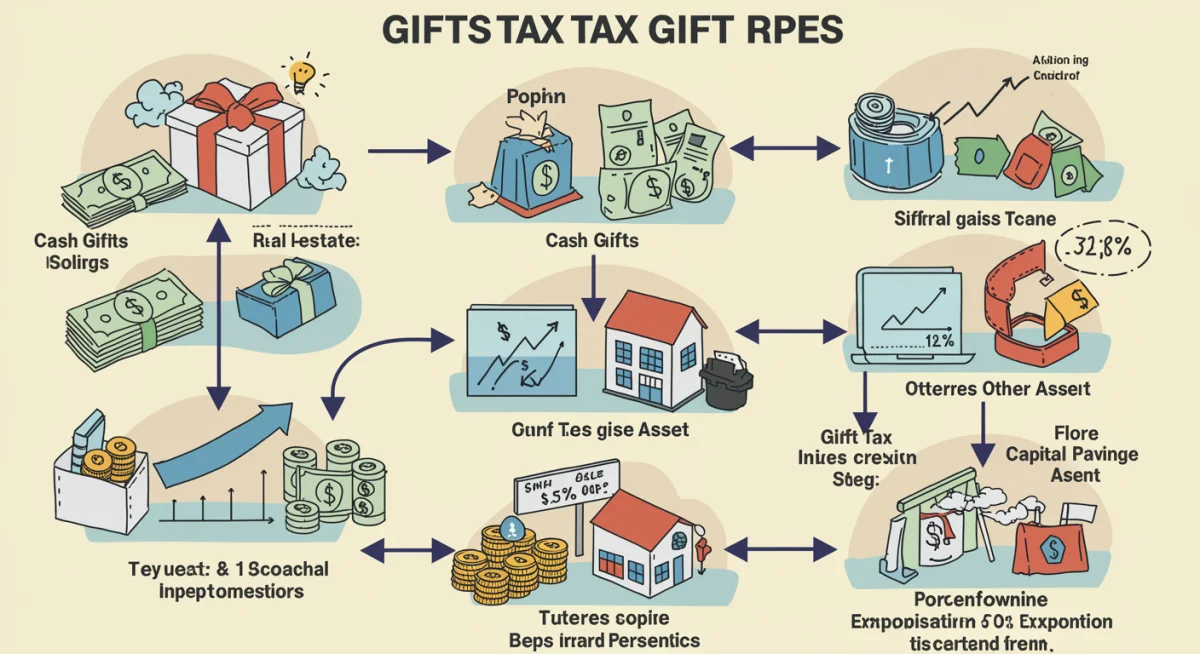
The annual gift tax exclusion applies to a wide variety of assets, not just cash. This flexibility allows for creative and effective wealth transfer strategies tailored to specific financial situations and goals. Understanding which assets qualify is crucial for maximizing the benefits of the 2025 exclusion and ensuring compliance with IRS regulations.
Common assets that can be gifted include cash, publicly traded stocks, mutual fund shares, real estate, and interests in closely held businesses. The fair market value of the gifted asset at the time of the gift is what counts against the annual exclusion limit. For assets like real estate or business interests, obtaining a professional appraisal is often necessary to determine their accurate value, ensuring proper reporting and avoiding potential issues with the IRS.
Gifting Appreciated Assets
One particularly effective strategy involves gifting appreciated assets. When you gift an asset that has increased in value, its future appreciation also moves out of your estate. Furthermore, if the recipient is in a lower tax bracket, they might pay less capital gains tax when they eventually sell the asset than you would have.
- Removes Future Appreciation: Any growth in the asset’s value after the gift is excluded from your estate.
- Potential Capital Gains Savings: Donees in lower tax brackets may realize the gain at a reduced rate.
- Consider Basis: The donee receives the donor’s cost basis, so choose assets with a reasonable basis for gifting.
However, it’s important to consider the recipient’s tax situation and the asset’s cost basis. While gifting appreciated assets can be highly beneficial, gifting assets that have declined in value might be less ideal, as the recipient will inherit your lower basis, potentially limiting their ability to claim a loss. Thoughtful selection of assets is a key component when determining how to use the 2025 US Gift Tax Exclusion effectively for wealth transfer.
Pitfalls to Avoid with Gift Tax Exclusion
While the annual gift tax exclusion is a powerful tool for wealth transfer, several common pitfalls can inadvertently lead to tax complications or negate its benefits. Awareness of these issues is crucial for anyone looking to optimize their gifting strategy and avoid unintended consequences with the IRS.
One frequent mistake is failing to properly document gifts, especially for non-cash assets. Without clear records of the gift, its value, and the recipient, it can be challenging to prove to the IRS that the gift qualified for the exclusion. Another common error is misunderstanding the ‘present interest’ requirement for gifts to trusts, which can disqualify them from the annual exclusion if not structured correctly, such as with a Crummey power.
Indirect Gifts and Reciprocal Gifts
The IRS scrutinizes indirect gifts and reciprocal gift arrangements closely. An indirect gift occurs when you give money to one person with the understanding that they will then transfer it to a third party, effectively circumventing the per-recipient limit. Similarly, reciprocal gifts involve two individuals gifting to each other’s children or beneficiaries with the intent of exceeding their individual exclusion limits.
- Indirect Gifts: Giving to a straw man (or woman) to benefit another will likely be reclassified by the IRS.
- Reciprocal Gifts: Coordinated gifts between two donors to each other’s families can be challenged as a single larger gift.
- Intent Matters: The IRS often looks at the substance over the form of the transaction.
These types of arrangements are typically viewed as attempts to bypass the spirit of the gift tax laws and can result in the gifts being aggregated, potentially exceeding the annual exclusion and triggering gift tax liability or the use of lifetime exemption. When planning how to use the 2025 US Gift Tax Exclusion effectively for wealth transfer, transparency and directness in gifting are always the best approach to ensure compliance and avoid scrutiny.
Integrating Gift Exclusion with Estate Planning
The annual gift tax exclusion is not a standalone tool but rather an integral component of a comprehensive estate plan. When strategically combined with other estate planning techniques, it can significantly enhance wealth transfer efficiency and achieve long-term financial goals. Integrating these elements requires a holistic view of your assets, beneficiaries, and future intentions.
For instance, using the annual exclusion to gradually reduce the size of your taxable estate can work in tandem with establishing various types of trusts, such as irrevocable life insurance trusts (ILITs) or charitable remainder trusts. These trusts can manage assets, provide for beneficiaries, and offer additional tax advantages, all while being bolstered by the regular, tax-free transfers facilitated by the annual exclusion.
Lifetime Exemption and Generation-Skipping Transfer Tax
Understanding the interplay between the annual gift tax exclusion and the lifetime gift and estate tax exemption is crucial. Gifts made within the annual exclusion do not consume any portion of your lifetime exemption, which is a much larger amount that can be used for gifts exceeding the annual exclusion or for your estate at death. For 2025, this exemption is also expected to be adjusted for inflation, potentially offering an even greater opportunity for tax-free transfers.
- Preserve Lifetime Exemption: Annual exclusion gifts keep your larger lifetime exemption intact for future use.
- GST Tax Considerations: Gifts to grandchildren or skip persons may also be subject to Generation-Skipping Transfer (GST) tax, but the annual gift tax exclusion can also apply to GST tax, provided certain conditions are met.
- Regular Review: Estate plans should be reviewed regularly to adapt to changes in tax law and personal circumstances.
Effectively using the annual exclusion helps to chip away at your taxable estate over time, making your lifetime exemption more impactful for larger, more complex transfers. This layered approach to wealth management provides a robust framework for securing your legacy. Therefore, when considering how to use the 2025 US Gift Tax Exclusion effectively for wealth transfer, it’s essential to view it as part of a broader, well-coordinated estate planning strategy.
Consulting a Financial Professional for 2025
Navigating the complexities of tax law and wealth transfer strategies can be challenging, especially as regulations evolve. While understanding how to use the 2025 US Gift Tax Exclusion effectively for wealth transfer is important, applying these principles to your unique financial situation often requires expert guidance. A qualified financial professional, such as an estate planning attorney, a certified financial planner, or a tax advisor, can provide invaluable assistance.
These professionals can help you assess your current financial standing, identify your wealth transfer goals, and design a customized plan that maximizes the benefits of the 2025 annual gift tax exclusion and other relevant tax provisions. They can also ensure that your gifting strategies comply with all federal and state laws, minimizing the risk of audits or unexpected tax liabilities.
Key Areas Where Professionals Can Help
Engaging with a financial professional offers several distinct advantages, particularly in the realm of complex estate planning and tax optimization. Their expertise can clarify intricate rules and help you make informed decisions.
- Personalized Strategy Development: Tailoring gifting strategies to your specific family structure and financial objectives.
- Compliance and Documentation: Ensuring all gifts are properly documented and reported, if necessary, to meet IRS requirements.
- Integration with Trusts: Advising on the establishment and management of trusts, such as Crummey trusts, to facilitate tax-efficient transfers to minors.
- Staying Updated on Tax Law Changes: Providing insights into potential changes in tax legislation that could impact your wealth transfer plans.
Ultimately, the goal is to transfer wealth efficiently and effectively, preserving as much as possible for your beneficiaries. An experienced professional can provide the peace of mind that comes from knowing your wealth transfer plan is robust, compliant, and optimized for your financial future. When considering how to use the 2025 US Gift Tax Exclusion effectively for wealth transfer, professional advice is not just beneficial, but often essential.
| Key Aspect | Brief Description |
|---|---|
| Annual Exclusion Limit | Amount you can gift to each person annually without gift tax or using lifetime exemption (adjusted for 2025). |
| Strategic Gifting | Leveraging the exclusion to systematically reduce taxable estate over time, especially with appreciated assets. |
| Couples’ Advantage | Married couples can double the annual exclusion amount per recipient, accelerating wealth transfer. |
| Professional Guidance | Essential for navigating complexities, ensuring compliance, and optimizing wealth transfer strategies. |
Frequently Asked Questions About the 2025 Gift Tax Exclusion
The exact limit for 2025 will be announced by the IRS, typically in late 2024. It is expected to be an increase from the 2024 limit of $18,000 per donee, adjusted for inflation. This amount allows individuals to give tax-free gifts without impacting their lifetime exemption.
Yes, you can gift more than the annual exclusion amount. However, any amount exceeding the annual exclusion will count against your lifetime gift and estate tax exemption. Once this lifetime exemption is exhausted, gift tax may apply to further gifts.
No, direct payments made to an educational institution for tuition or to a medical provider for medical care do not count against the annual gift tax exclusion. These are separate exclusions designed to facilitate support for education and health.
Gifting appreciated assets removes their future growth from your taxable estate. Additionally, if the recipient is in a lower tax bracket, they might pay less in capital gains tax when they eventually sell the asset, optimizing overall tax efficiency.
Professional advice from estate planning attorneys or financial advisors ensures your gifting strategies are compliant with current tax laws, optimized for your specific goals, and properly documented. It helps avoid common pitfalls and maximizes wealth transfer efficiency.
Conclusion
Mastering how to use the 2025 US Gift Tax Exclusion effectively for wealth transfer is a vital skill for anyone dedicated to thoughtful financial stewardship and legacy planning. This annual exclusion, when properly understood and strategically applied, offers a powerful mechanism to transfer significant wealth to future generations without triggering immediate tax liabilities or eroding the lifetime exemption. From direct cash gifts to sophisticated trust arrangements and the strategic gifting of appreciated assets, the opportunities to optimize your wealth transfer are extensive. However, the nuances of tax law and the intricacies of personal financial situations necessitate careful planning and, often, the guidance of experienced financial professionals. By proactively engaging with these strategies and seeking expert advice, you can ensure your wealth transfer plan is robust, efficient, and aligned with your long-term family and financial objectives, securing a lasting legacy for those you care about most.
