High-Yield Savings Accounts 2026: Top 5 Banks Over 4.5% APY

Anúncios
Finding the best high-yield savings accounts in 2026 is essential for growing your wealth, as this guide explores the top 5 banks currently offering impressive APY rates exceeding 4.5%.
Anúncios
Are you tired of your hard-earned money sitting idle in a traditional savings account, earning next to nothing? In today’s dynamic financial landscape, choosing the right savings vehicle can make a significant difference to your financial future. This guide focuses on Comparing High-Yield Savings Accounts in 2026: Top 5 Banks Offering Over 4.5% APY, a crucial step for anyone looking to maximize their returns.
The Ascent of High-Yield Savings Accounts
High-yield savings accounts have emerged as a powerful tool for individuals seeking to grow their savings more aggressively than traditional accounts allow. These accounts typically offer annual percentage yields (APYs) significantly higher than the national average, making them an attractive option for both short-term goals and long-term wealth accumulation.
Anúncios
The appeal of these accounts lies in their ability to provide a better return on your idle cash without exposing it to the volatility of the stock market. As interest rates fluctuate, the competitive nature of the banking industry drives institutions to offer increasingly attractive APYs to draw in depositors. Understanding how these accounts work and what to look for is the first step toward optimizing your financial strategy.
What Drives High APYs?
Several factors contribute to a bank’s ability to offer high APYs. Online-only banks, for instance, often have lower overhead costs compared to their brick-and-mortar counterparts. This efficiency allows them to pass on savings to customers in the form of higher interest rates. Additionally, market conditions, such as the Federal Reserve’s benchmark interest rates, play a significant role in determining the overall rate environment.
- Lower Operating Costs: Digital banks save on physical branches and staff.
- Market Competition: Banks vie for deposits by offering better rates.
- Federal Reserve Rates: Benchmark rates influence the broader interest rate landscape.
In conclusion, the rise of high-yield savings accounts reflects a shift in consumer demand for better returns on their savings. By understanding the underlying mechanics and market forces, individuals can strategically choose accounts that best fit their financial objectives, ensuring their money works harder for them.
Criteria for Selecting Top High-Yield Accounts
When diving into the world of high-yield savings accounts, it’s not just about the APY. While a high annual percentage yield is undoubtedly a primary motivator, several other factors contribute to a truly beneficial banking experience. Evaluating these criteria ensures that you’re not just chasing rates but also securing a reliable and convenient financial partner.
Consideration of these elements will help you make an informed decision that aligns with your personal financial habits and long-term goals. A holistic approach to selection ensures satisfaction beyond just the interest earned.
Key Factors Beyond APY
Beyond the headline APY, look into account fees, minimum balance requirements, and ease of access to your funds. Some banks might offer a stellar APY but impose monthly maintenance fees that can erode your earnings if you don’t meet certain conditions. Others might require a substantial initial deposit or maintain a high minimum balance to qualify for the advertised rate.
- Account Fees: Scrutinize monthly maintenance fees, transfer fees, and ATM charges.
- Minimum Balance: Check initial deposit requirements and ongoing balance minimums.
- Accessibility: Evaluate ease of transfers, ATM access, and mobile banking features.
- FDIC Insurance: Ensure your deposits are protected by the FDIC up to $250,000.
Furthermore, the reputation and customer service of the bank are paramount. A high APY from a bank with poor customer support or a history of technical issues can quickly become a headache. Look for institutions with a strong track record and positive customer reviews, especially concerning their online and mobile banking platforms. Ultimately, a good high-yield savings account balances competitive rates with practical features and reliable service.
Top 5 Banks Offering Over 4.5% APY in 2026
As we navigate the financial landscape of 2026, several institutions stand out for their commitment to offering competitive interest rates on high-yield savings accounts. These banks have consistently provided attractive APYs, making them prime candidates for anyone looking to maximize their savings. Our selection focuses on those consistently offering over 4.5% APY, alongside strong customer service and user-friendly platforms.
It’s important to remember that APYs can change, so always verify the current rates directly with the bank. However, these five have demonstrated a strong track record and are likely to remain leaders in the high-yield savings space.
Bank A: The Digital Innovator
Bank A has consistently led the pack with its innovative digital banking solutions and highly competitive APY. Known for its seamless online experience and minimal fees, it’s a favorite among tech-savvy savers. They typically require a low minimum deposit to open and maintain the high yield, making it accessible to a broader audience.
Bank B: Customer-Centric Approach
Bank B distinguishes itself with an exceptional focus on customer service, alongside a robust APY. Their platform is incredibly intuitive, and they offer extensive support resources, ensuring a smooth experience even for those new to online banking. While their minimum deposit might be slightly higher, the overall value proposition is strong.
Bank C: Stable and Reliable Growth
Bank C offers a compelling blend of a strong APY and a reputation for stability. They are often chosen by those who prioritize security and consistent returns. Their accounts typically come with no monthly fees, provided certain conditions are met, making them a transparent option for long-term savers.
Bank D: Flexible Savings Options
Bank D provides various savings products, with their high-yield account consistently offering rates above 4.5% APY. They are praised for their flexibility, allowing easy transfers and integration with other financial tools. This bank is particularly appealing to those who manage multiple accounts and seek integrated financial solutions.
Bank E: Emerging Market Leader
Bank E, while perhaps newer to some, has quickly established itself as a significant player in the high-yield market. Their aggressive APY offers are designed to attract new customers, often accompanied by promotional bonuses. They are rapidly expanding their digital features, making them a bank to watch in the coming years.
In summary, these five banks represent the pinnacle of high-yield savings opportunities in 2026. Each offers unique advantages, but all share the common thread of providing excellent returns on your savings, helping you reach your financial goals faster.
Understanding APY vs. Interest Rate
When exploring savings accounts, you’ll frequently encounter terms like ‘interest rate’ and ‘APY’ (Annual Percentage Yield). While often used interchangeably, there’s a critical distinction between the two that can significantly impact your actual earnings. Grasping this difference is fundamental to making informed decisions about where to park your money.
An interest rate is the basic percentage of your principal that a bank pays you for depositing your money. APY, however, provides a more comprehensive picture of your earnings by factoring in the effect of compounding interest over a year.
The Power of Compounding
Compounding interest means earning interest not only on your initial deposit but also on the accumulated interest from previous periods. This ‘interest on interest’ effect can dramatically increase your returns over time, especially in high-yield accounts.
- Interest Rate: Simple percentage applied to your principal.
- APY: Reflects the total return over a year, including compounding.
- Compounding Frequency: The more frequent the compounding (daily, monthly), the higher the effective APY.
For example, an account with a 4.5% interest rate compounded daily will have a slightly higher APY than an account with the same 4.5% interest rate compounded annually. This seemingly small difference can lead to substantial gains over the long term. Always look for the APY when comparing savings accounts, as it gives you the truest representation of what your money will earn annually.
In essence, while the interest rate is the raw figure, the APY is the effective rate that shows the true growth potential of your savings after a full year, taking into account how often interest is calculated and added back to your balance. Prioritizing APY ensures you are making the most accurate comparison between different savings products.
Maximizing Your High-Yield Savings Potential
Simply opening a high-yield savings account is a great start, but truly maximizing its potential requires a strategic approach. It’s about more than just depositing money; it involves understanding how to leverage the account’s features, avoiding pitfalls, and integrating it into your broader financial plan. Smart savers don’t just find a high APY; they optimize their usage of it.
This section explores practical tips and considerations to ensure you’re getting the most out of your high-yield savings account, turning it into a powerful engine for your financial growth.
Strategies for Optimal Growth
One key strategy is to automate your savings. Setting up automatic transfers from your checking account to your high-yield savings account ensures consistent contributions, allowing compounding interest to work its magic more effectively. Even small, regular contributions can add up significantly over time.
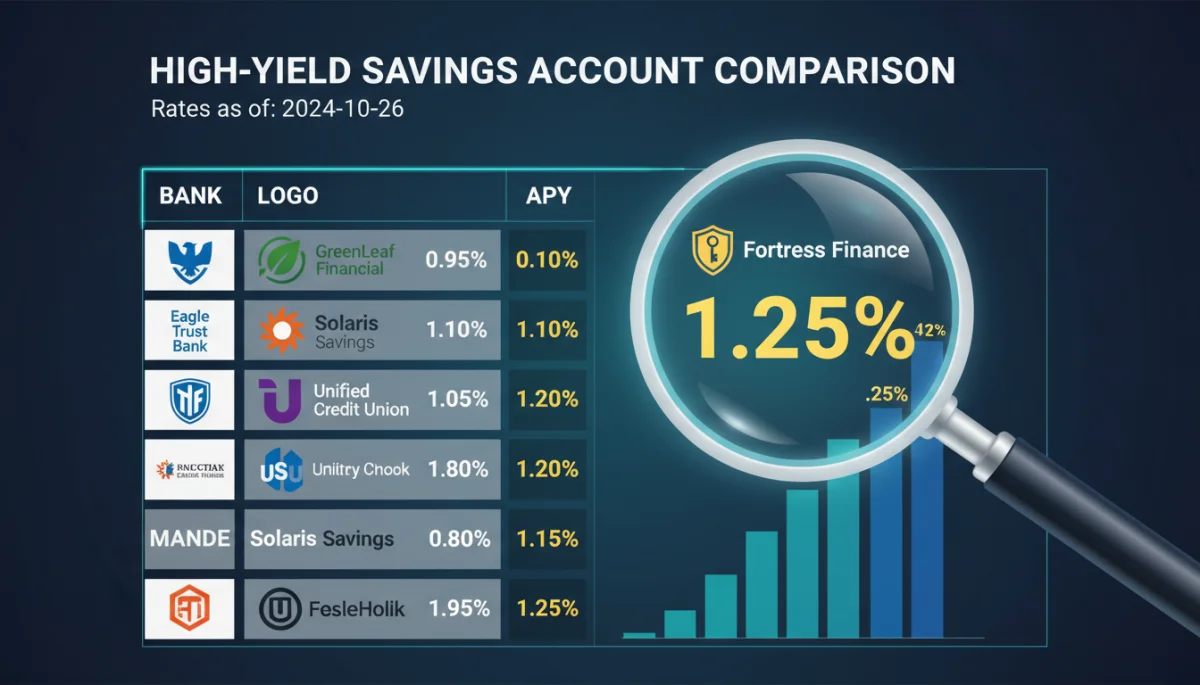
Another crucial tip is to avoid unnecessary withdrawals. While high-yield accounts typically offer easy access to funds, frequent withdrawals can disrupt the compounding process and reduce your overall earnings. Think of this account as a growth engine, not a daily spending fund.
- Automate Transfers: Set up recurring deposits to ensure consistent growth.
- Minimize Withdrawals: Keep funds in the account to maximize compounding.
- Monitor Rates: Periodically check if your bank’s APY remains competitive.
- Link Accounts: Connect to your primary checking for seamless transfers.
Furthermore, always keep an eye on market trends and competitor rates. If your bank’s APY drops significantly, don’t hesitate to explore other options. The financial market is dynamic, and staying proactive ensures you’re always getting the best possible return. By actively managing and optimizing your high-yield savings, you transform it from a simple account into a powerful tool for achieving your financial aspirations.
Navigating Fees and Restrictions
While the allure of high APYs is strong, it’s crucial to delve into the fine print of any high-yield savings account. Banks, even those offering attractive rates, often have various fees and restrictions that can erode your earnings if not properly understood. A thorough review of these terms is essential to avoid unexpected charges and ensure the account truly benefits you.
Understanding these potential costs and limitations helps you choose an account that is not only high-yielding but also cost-effective and convenient for your specific financial habits.
Common Fees to Watch Out For
Many high-yield savings accounts, particularly those from online-only banks, pride themselves on being ‘fee-free.’ However, this often comes with caveats. Common fees can include monthly maintenance fees, which are usually waived if you maintain a certain minimum balance or set up direct deposits. Exceeding transaction limits can also lead to charges.
- Monthly Maintenance Fees: Often waived with minimum balances or direct deposits.
- Excessive Transaction Fees: Charges for exceeding a certain number of withdrawals per month.
- Wire Transfer Fees: Costs associated with sending or receiving money via wire.
- Overdraft Fees: Though less common in savings, some linked accounts might have them.
Beyond fees, be aware of restrictions such as limits on the number of monthly withdrawals or transfers. Federal Regulation D historically limited certain types of withdrawals from savings accounts to six per month, though this regulation has been suspended. However, individual banks may still impose their own limits. Always read the disclosure agreement carefully to understand all terms and conditions before committing to an account. By being vigilant about fees and restrictions, you can ensure that the high APY translates into real, tangible savings growth.
| Key Aspect | Brief Description |
|---|---|
| High APY Focus | Accounts offering over 4.5% Annual Percentage Yield for significant growth. |
| Selection Criteria | Beyond APY, consider fees, minimums, accessibility, and customer service. |
| APY vs. Interest Rate | APY includes compounding, giving a true annual return; always compare APY. |
| Maximizing Growth | Automate savings, minimize withdrawals, and regularly monitor competitive rates. |
Frequently Asked Questions About High-Yield Savings
A high-yield savings account offers significantly higher interest rates (APY) than traditional savings accounts. These accounts are typically offered by online banks, which have lower overhead costs, allowing them to pass on greater returns to their customers. They are ideal for growing your savings faster.
Yes, as long as the bank is FDIC-insured, your deposits are protected up to $250,000 per depositor, per insured bank, for each account ownership category. Most reputable high-yield savings providers in the U.S. are FDIC-insured, ensuring the safety of your funds.
APY rates for high-yield savings accounts are variable and can change frequently, often in response to market conditions, Federal Reserve interest rate adjustments, and bank strategies. It’s wise to monitor your account’s APY periodically and compare it with competitors.
While federal regulations no longer limit monthly withdrawals from savings accounts, individual banks may still impose their own transaction limits. Always check the specific terms and conditions of your account to understand any withdrawal restrictions or associated fees to avoid surprises.
Minimum deposit requirements vary widely among banks. Some high-yield accounts may require no minimum to open, while others might ask for a few hundred or even a thousand dollars. Always check the bank’s specific requirements, as a higher minimum might be tied to a higher APY.
Conclusion
In 2026, the landscape of personal finance continues to evolve, making the strategic choice of where to save your money more important than ever. Comparing High-Yield Savings Accounts in 2026: Top 5 Banks Offering Over 4.5% APY has highlighted that significant opportunities exist for those willing to look beyond traditional options. By focusing on accounts that offer competitive APYs and understanding the nuances of fees, restrictions, and the power of compounding, you can empower your savings to grow substantially. The path to financial prosperity is paved with informed decisions, and selecting the right high-yield savings account is a cornerstone of that journey.
