K-12 Education Standards: US State-by-State Rollout 2026-2027
Anúncios
The 2026-2027 academic year marks a pivotal moment for K-12 education across the United States, as new standards are set to redefine learning objectives, curriculum design, and assessment strategies to meet evolving societal and economic demands.
The landscape of American schooling is continually evolving, and the 2026-2027 academic year promises substantial shifts. A comprehensive State-by-State Breakdown: New K-12 Education Standards Rolling Out Across the US for 2026-2027 reveals a concerted effort to modernize curricula and assessment methods. This nationwide initiative aims to better equip students with the skills needed for a rapidly changing world.
Anúncios
Understanding the impetus for new K-12 education standards
The push for new K-12 education standards is not a sudden development but rather the culmination of years of research, technological advancements, and a deeper understanding of pedagogical best practices. Educators, policymakers, and industry leaders recognize the need to prepare students for careers that may not even exist yet, emphasizing critical thinking, problem-solving, and digital literacy.
These revised standards reflect a national dialogue on what constitutes a truly effective and equitable education in the 21st century. They aim to address achievement gaps, foster innovation, and ensure that every student has access to a high-quality learning experience, regardless of their zip code.
Anúncios
The evolving educational landscape
- Technological integration: New standards often emphasize incorporating digital tools and computational thinking across subjects.
- Global competitiveness: The focus is on preparing students to compete and collaborate on an international stage.
- Workforce readiness: Aligning education with the demands of modern industries, including STEM fields and soft skills.
Ultimately, the goal is to move beyond rote memorization and encourage deeper understanding and application of knowledge. This paradigm shift requires not only new curriculum frameworks but also professional development for teachers and updated assessment tools that truly measure student growth and mastery. The commitment to these new standards signifies a forward-looking vision for American education.
Key areas of focus: curriculum and assessment overhauls
The new K-12 education standards rolling out for 2026-2027 are characterized by significant overhauls in both curriculum design and assessment methodologies. States are moving towards more integrated, interdisciplinary approaches that connect various subjects and real-world applications. This means fewer isolated topics and more thematic units that encourage students to see the big picture.
Assessment is also undergoing a transformation. Beyond traditional standardized tests, there’s a growing emphasis on performance-based assessments, project-based learning, and portfolios that demonstrate a student’s ability to apply knowledge and skills creatively. This aims to provide a more holistic view of student learning and progress.
Shifting pedagogical approaches
Many states are advocating for teaching methods that promote active learning, student-led inquiry, and collaborative projects. This move away from purely teacher-centered instruction empowers students to take ownership of their learning journey. It also encourages educators to act as facilitators, guiding students through complex concepts rather than simply delivering information.
- Literacy across subjects: Integrating reading, writing, and communication skills into science, social studies, and even mathematics.
- STEM emphasis: Strengthening science, technology, engineering, and mathematics education from early grades.
- Social-emotional learning (SEL): Recognizing the importance of emotional intelligence, self-awareness, and responsible decision-making alongside academic achievement.
These changes are designed to foster a more engaging and relevant educational experience. The curriculum is becoming more dynamic, reflecting current events and societal needs, while assessments are evolving to better capture the diverse ways students demonstrate their understanding and capabilities. The focus is on creating well-rounded individuals prepared for both academic and life success.
Regional variations: a closer look at state-specific adoptions
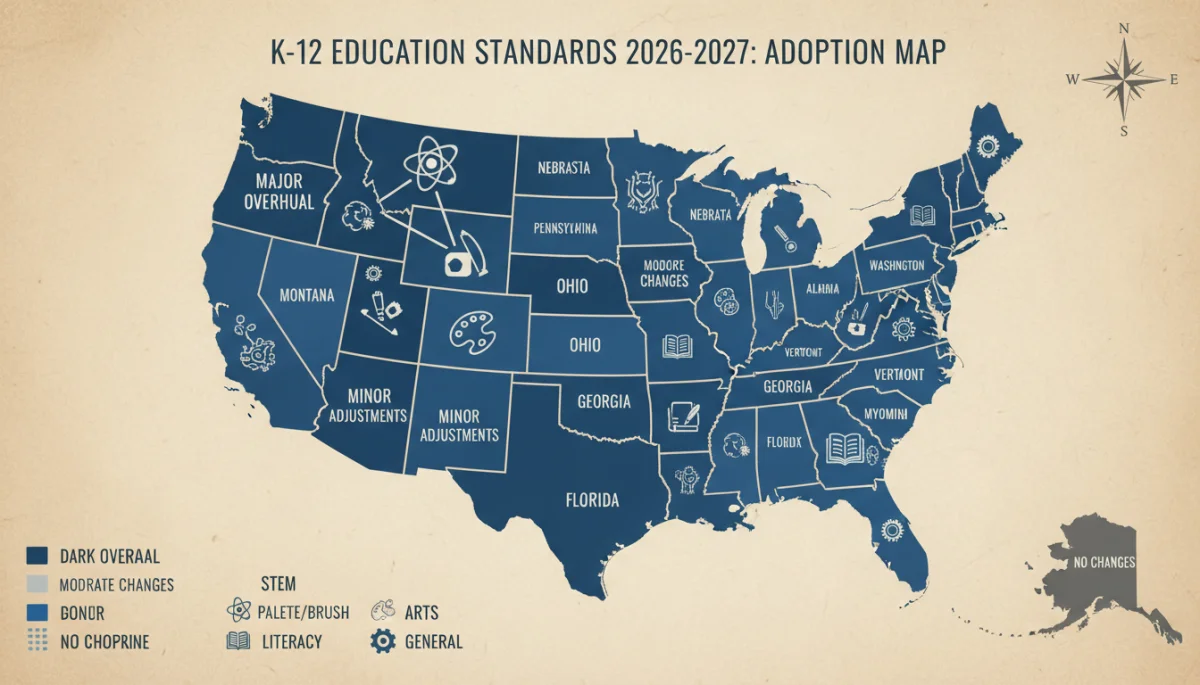
While there’s a national trend towards modernizing K-12 education, the implementation of new standards varies significantly from state to state. Each state’s educational agency has the autonomy to interpret and adapt national frameworks, leading to unique approaches tailored to local needs and priorities. This regional variation is a hallmark of the American education system.
Some states are undertaking complete curriculum overhauls, while others are making targeted adjustments to specific subject areas or grade levels. These decisions are often influenced by state legislative mandates, community feedback, and the specific challenges and opportunities within their educational ecosystems. Understanding these nuances is crucial for parents, educators, and students alike.
Spotlight on diverse state initiatives
For example, states like California and New York might focus heavily on environmental literacy and civic engagement within their new standards, reflecting their unique demographic and political landscapes. Conversely, states in the Midwest or South might prioritize agricultural science or vocational training, aligning with their regional economic drivers.
- Texas: Emphasizing career and technical education (CTE) pathways and digital skills integration across all grades.
- Massachusetts: Strengthening early childhood education standards and a renewed focus on arts and humanities.
- Florida: Implementing new civics education requirements and expanded financial literacy programs.
These state-specific adoptions mean that while the overarching goals of student preparedness and academic excellence remain constant, the journey to achieve them will look different depending on where a student attends school. It highlights the importance of staying informed about local educational policies and how they will directly impact learning experiences.
The role of technology in new K-12 education standards
Technology is not merely a tool but a foundational element embedded within many of the new K-12 education standards for 2026-2027. States are recognizing that digital literacy is no longer an optional skill but a fundamental requirement for success in nearly all aspects of modern life. This integration goes beyond simply using computers in the classroom; it involves teaching students how to think computationally, analyze digital information critically, and create with technology.
From coding and robotics to digital citizenship and media literacy, the new standards aim to equip students with the competencies to navigate and thrive in a technology-rich world. This emphasis also extends to leveraging technology for personalized learning experiences, allowing educators to tailor instruction to individual student needs and learning styles more effectively.
Integrating digital tools for enhanced learning
The adoption of learning management systems (LMS), educational apps, and virtual reality (VR) tools is accelerating under these new guidelines. These technologies offer dynamic ways to present complex information, facilitate interactive learning, and provide immediate feedback to students. The goal is to make learning more engaging and accessible, bridging geographical and socioeconomic divides.
- Personalized learning platforms: Adapting content and pace to individual student requirements.
- Computational thinking: Introducing coding and logic problems from elementary grades.
- Digital citizenship: Educating students on responsible and ethical online behavior, cybersecurity, and data privacy.
The strategic integration of technology into the new K-12 education standards represents a commitment to preparing students for a future where digital fluency is paramount. It transforms classrooms into dynamic learning environments where technology enhances both teaching and learning, fostering innovation and adaptability among the next generation.
Challenges and opportunities for educators and schools
The rollout of new K-12 education standards presents both significant challenges and exciting opportunities for educators and school systems across the nation. One primary challenge lies in the sheer scale of professional development required. Teachers need adequate training, resources, and time to effectively implement new curricula and assessment strategies. This often demands substantial investment from state and local authorities.
Another hurdle is ensuring equitable access to resources, particularly technology and qualified personnel, in all schools, including those in underserved communities. Bridging the digital divide and providing ongoing support for educators are critical to the successful adoption of these standards. However, these challenges also open doors for innovation and growth within the educational community.
Navigating the transition successfully
The opportunities arising from these new standards are immense. They provide a chance to reinvigorate teaching practices, foster greater collaboration among educators, and create more engaging and relevant learning experiences for students. Schools can become hubs of innovation, experimenting with new pedagogical approaches and curriculum designs that better reflect the needs of their communities.
- Professional development: Investing in continuous learning opportunities for teachers on new standards and tools.
- Resource allocation: Ensuring equitable distribution of technological and instructional materials across districts.
- Community engagement: Involving parents and local businesses in supporting the transition to new educational paradigms.
Ultimately, the successful implementation of new K-12 education standards hinges on strong leadership, collaborative spirit, and a sustained commitment to supporting educators. While the path may be challenging, the potential for transforming student learning outcomes and preparing them for future success is a powerful motivator for all involved stakeholders.
Parental involvement and student preparation for the changes
As new K-12 education standards roll out, parental involvement becomes more crucial than ever in ensuring students are prepared for the changes. Effective communication from schools to parents about the nature of these new standards, what they entail, and how they will impact their children’s learning is paramount. Parents need to understand the ‘why’ behind the changes to fully support their children at home.
Beyond understanding, parents can play an active role by engaging with school events, volunteering, and fostering a learning-rich environment at home that complements the new curriculum. Encouraging curiosity, critical thinking, and a growth mindset can significantly help students adapt to evolving educational expectations.
Empowering parents and students
Schools are encouraged to host informational sessions, workshops, and provide accessible resources that explain the new standards in plain language. This proactive approach helps demystify complex educational reforms and empowers parents to become informed partners in their children’s education. For students, preparation involves developing adaptability and resilience.
- Communication channels: Establishing clear and regular communication between schools and families regarding new standards.
- Home learning support: Providing resources and tips for parents to reinforce new learning approaches at home.
- Student mindset: Cultivating a flexible and curious attitude in students towards new ways of learning and assessment.
The transition to new K-12 education standards is a collective effort. When parents are well-informed and actively involved, and students are prepared to embrace new learning challenges, the positive impact on educational outcomes can be profound. This partnership between home and school is a cornerstone of successful educational reform and student achievement.
| Key Aspect | Brief Description |
|---|---|
| Curriculum Overhaul | Shift towards interdisciplinary, real-world relevant learning, moving beyond rote memorization. |
| Assessment Changes | Emphasis on performance-based tasks, project-based learning, and holistic student evaluation. |
| Technology Integration | Incorporation of digital literacy, computational thinking, and personalized learning tools. |
| Educator Support | Need for extensive professional development and resources for effective implementation. |
Frequently asked questions about new K-12 education standards
The main goals are to modernize curricula, foster critical thinking and problem-solving skills, enhance digital literacy, and better prepare students for future careers and global citizenship. These standards aim to create a more relevant and engaging learning experience for all.
Student assessment will shift towards more performance-based tasks, project-based learning, and portfolios, alongside traditional tests. This aims to provide a more comprehensive and authentic measure of student understanding and their ability to apply knowledge in practical contexts.
No, while there’s a national movement, each state has autonomy to interpret and adapt national frameworks to suit its unique needs and priorities. This leads to regional variations in curriculum focus and implementation strategies across the country.
Technology is integral, emphasizing digital literacy, computational thinking, and responsible online behavior. It also supports personalized learning and provides dynamic tools for teaching and engagement, preparing students for a digitally driven future.
Parents can support by staying informed through school communications, attending informational sessions, and fostering a curious learning environment at home. Encouraging adaptability and reinforcing new learning approaches are key to their child’s success.
Conclusion
The 2026-2027 rollout of new K-12 education standards across the US represents a significant and necessary evolution in how we approach teaching and learning. These changes, while varied in their state-by-state implementation, share a common goal: to better prepare students for the complexities of the 21st century. By focusing on critical thinking, digital literacy, and practical application of knowledge, these standards aim to cultivate a generation of adaptable, innovative, and engaged citizens. The success of this ambitious undertaking will depend on sustained collaboration among policymakers, educators, parents, and communities, ensuring that every student has the opportunity to thrive in a rapidly changing world.
