Social Security Update: Projected 3% COLA for 2025

Anúncios
Social Security beneficiaries are projected to receive a 3% Cost-of-Living Adjustment (COLA) in 2025, a critical update reflecting inflation’s impact and intended to maintain purchasing power for millions of Americans relying on these benefits.
The anticipation around the annual Social Security Cost-of-Living Adjustment (COLA) is always significant for millions of Americans. This year, the latest projections indicate a potential 2025 Social Security COLA of 3%, a figure that could profoundly impact the financial well-being of retirees, disabled individuals, and survivors. Understanding what this adjustment means, how it’s calculated, and its broader implications is crucial for effective financial planning and maintaining purchasing power in an evolving economic landscape.
Anúncios
Understanding the Social Security COLA
The Cost-of-Living Adjustment, or COLA, is an essential mechanism designed to protect Social Security beneficiaries from the eroding effects of inflation. Without COLA, the fixed income received by retirees and other beneficiaries would steadily lose its purchasing power over time, making it increasingly difficult to afford basic necessities. This annual adjustment helps ensure that Social Security benefits keep pace with rising prices.
Each year, the Social Security Administration (SSA) announces the COLA for the upcoming year, typically in October. This adjustment is based on changes in the Consumer Price Index for Urban Wage Earners and Clerical Workers (CPI-W). The calculation compares the average CPI-W from the third quarter of the current year to the average CPI-W from the third quarter of the last year in which a COLA was payable. If there’s an increase, that percentage difference becomes the COLA.
Anúncios
The mechanism behind COLA calculation
The formula for determining COLA is straightforward yet critical to understand for anyone relying on Social Security benefits. It’s not just an arbitrary number; it’s directly tied to economic indicators.
- CPI-W as the benchmark: The CPI-W specifically measures changes in the prices of goods and services consumed by urban wage earners and clerical workers. This index is chosen because it is believed to reflect the spending patterns of a significant portion of Social Security beneficiaries.
- Quarterly comparison: The SSA looks at the average CPI-W for July, August, and September. This average is then compared to the average of the same three months from the most recent year a COLA was enacted.
- No decrease clause: A crucial aspect of COLA is that Social Security benefits can never decrease due to a COLA. If the CPI-W shows a decline, the COLA for that year will be zero, meaning benefits remain unchanged but do not go down.
The projected 3% for 2025 suggests that inflation, while perhaps moderating from recent highs, is still a notable factor in the economy. This adjustment is a direct response to those inflationary pressures, aiming to provide a necessary boost to beneficiaries’ incomes.
In essence, the COLA serves as a vital safeguard, ensuring that the financial security provided by Social Security benefits remains relevant and effective in a dynamic economic environment. It’s a testament to the program’s commitment to supporting its recipients over the long term.
Analyzing the Projected 3% COLA for 2025
The projection of a 3% COLA for 2025 marks a significant point for Social Security beneficiaries, following several years of fluctuating adjustments. This forecast, while not yet official, provides an early indication of what millions can expect in their benefit checks starting next year. Understanding the context of this projection requires looking at recent economic trends and expert analyses.
Economists and financial analysts base these projections on current inflation data, particularly the CPI-W, which is the official metric used by the Social Security Administration. Factors such as energy prices, food costs, and housing expenses all contribute to the CPI-W’s movement. A 3% increase suggests that these vital costs are expected to continue rising, albeit at a potentially slower pace than in some recent years.
Historical context of COLA adjustments
To fully appreciate the 2025 projection, it’s helpful to review past COLA figures. Recent years have seen some of the largest adjustments in decades, largely due to elevated inflation.
- 2022 COLA: 5.9%
- 2023 COLA: 8.7% (the largest in 40 years)
- 2024 COLA: 3.2%
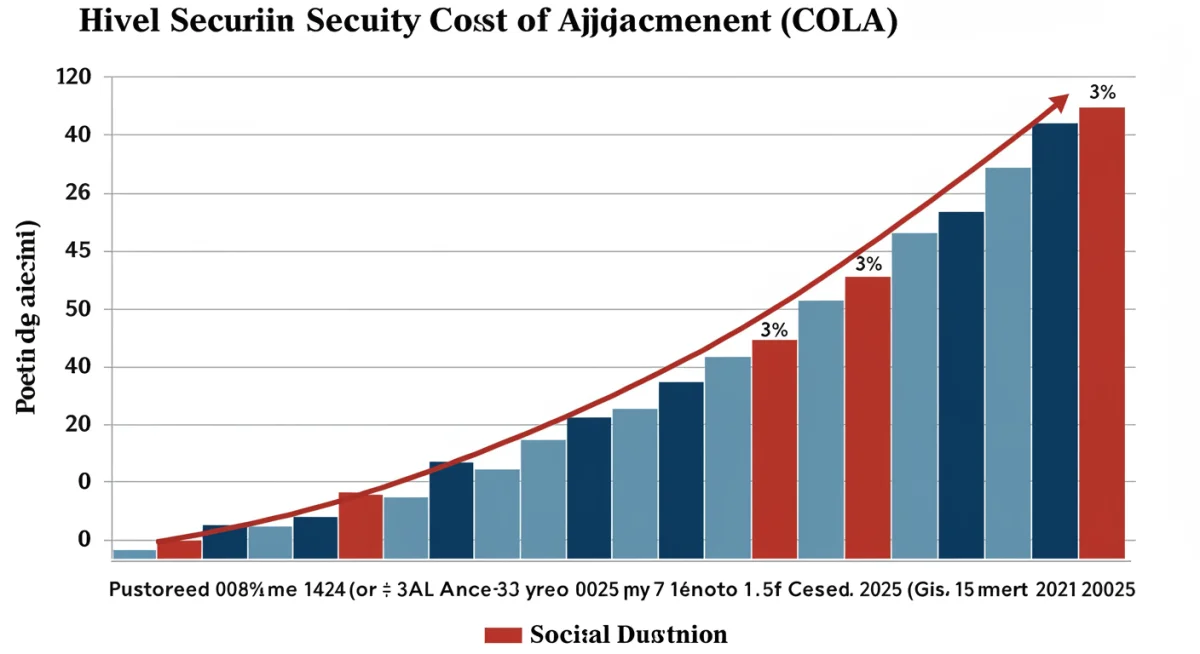
The projected 3% for 2025, therefore, would be slightly lower than the 2024 adjustment but still a substantial increase compared to the more modest COLAs seen in the 2010s. This sustained level of adjustment underscores the ongoing challenges of inflation for fixed-income households.
While a 3% increase is generally positive for beneficiaries, its real-world impact will depend heavily on the actual inflation rate experienced throughout 2025. If inflation exceeds this adjustment, beneficiaries could still see their purchasing power diminish. Conversely, if inflation cools more than expected, the COLA could provide a slight boost.
The ongoing monitoring of economic data, particularly the CPI-W, remains essential. These projections are dynamic and can shift as new information becomes available before the official announcement in October. Beneficiaries should stay informed about these developments to better plan their finances.
Impact on Beneficiaries and Retirement Planning
A projected 3% COLA for 2025 carries significant implications for the millions of Americans who rely on Social Security benefits as a primary or supplementary source of income. This adjustment directly influences their monthly budgets, long-term financial stability, and overall retirement planning strategies.
For many, Social Security benefits form the bedrock of their financial security. An increase, even a modest one, can mean the difference between struggling to meet expenses and maintaining a comfortable standard of living. This is particularly true for those with limited other income sources or facing rising healthcare costs.
Budgetary adjustments and cost of living
Beneficiaries often use the COLA to offset increases in their daily expenses. A 3% increase can help cover:
- Rising healthcare costs: Medicare Part B premiums, which are often deducted directly from Social Security benefits, frequently increase each year. The COLA helps cushion the impact of these rising premiums.
- Food and utility bills: These essential costs are often subject to inflationary pressures, and the COLA provides a necessary buffer.
- Housing expenses: For those renting or still paying a mortgage, even small increases can be impactful.
From a retirement planning perspective, the consistency of COLA adjustments, even if variable, is a critical component. Financial advisors often incorporate expected COLA increases into their projections to help clients understand how their retirement income might evolve over time. However, relying solely on COLA to keep pace with all expenses can be risky, especially if personal inflation rates (the rate at which one’s individual expenses increase) outpace the general CPI-W.
Therefore, while a 3% COLA is welcome news, it also serves as a reminder for beneficiaries to continuously review their budgets, explore additional income streams if possible, and consult with financial professionals to ensure their retirement plans remain robust against future economic shifts. Proactive planning is key to maximizing the benefit of any COLA increase.
Inflationary Pressures and Economic Outlook
The projected 3% 2025 Social Security COLA is a direct reflection of ongoing inflationary pressures within the U.S. economy. Understanding the broader economic context that drives these adjustments is crucial for appreciating their significance. While inflation has shown signs of moderating from its peak, it remains a persistent factor influencing consumer prices and, consequently, the purchasing power of fixed incomes.
Several economic indicators contribute to the inflationary environment. Global supply chain dynamics, energy prices, wage growth, and consumer demand all play a role. When these factors push prices upward, the CPI-W, which is the benchmark for COLA calculations, also rises, triggering an adjustment to Social Security benefits.
Key economic factors influencing COLA
Several elements are under constant scrutiny by economists attempting to forecast COLA figures:
- Energy costs: Fluctuations in oil and gas prices can significantly impact transportation and utility costs, directly affecting the CPI-W.
- Food prices: Global agricultural conditions, weather events, and distribution challenges can lead to volatility in food costs, a major component of household budgets.
- Housing market: Rent and homeownership costs, while not directly tied to CPI-W in the same way, indirectly influence overall cost of living and consumer spending patterns.
- Wage growth: Strong wage growth can contribute to inflation by increasing consumer purchasing power, potentially leading to higher demand and prices.
The current economic outlook suggests a continued battle against inflation, with the Federal Reserve playing a key role through its monetary policy decisions. Interest rate hikes, for example, are designed to cool the economy and bring inflation down. However, the full effects of these policies can take time to materialize, meaning beneficiaries will likely continue to see adjustments to their benefits to counterbalance price increases.
Overall, the 3% COLA projection for 2025 highlights the ongoing need for vigilance regarding economic conditions. Beneficiaries must remain aware of how these larger forces translate into their daily living costs, enabling them to make informed financial decisions.
Medicare Premiums and the COLA Relationship
One of the most significant considerations for Social Security beneficiaries regarding the annual COLA is its intricate relationship with Medicare premiums. For many, especially those enrolled in Medicare Part B, these premiums are directly deducted from their monthly Social Security checks. This direct link means that a COLA increase doesn’t always translate into a net gain in disposable income, as a portion of the increase can be offset by higher Medicare costs.
The ‘hold harmless’ provision is a critical protection for many beneficiaries. This provision ensures that Medicare Part B premiums cannot cause a reduction in a beneficiary’s net Social Security payment from one year to the next. If the Part B premium increase is greater than the COLA increase, the premium for eligible individuals is adjusted so that their net Social Security benefit does not decrease.
Navigating the ‘hold harmless’ provision
The ‘hold harmless’ rule primarily applies to beneficiaries who:
- Receive Social Security benefits.
- Have their Medicare Part B premiums deducted from their Social Security checks.
- Are not subject to Income-Related Monthly Adjustment Amount (IRMAA) surcharges (higher-income beneficiaries).
For those protected by ‘hold harmless,’ their Medicare Part B premium increase may be capped to ensure their Social Security benefit check does not shrink. However, this protection does not apply to all beneficiaries, especially those who are new to Medicare, those who pay IRMAA, or those who do not have their premiums deducted from their benefits.
The projected 3% COLA for 2025 will be evaluated against the upcoming Medicare Part B premium announcement, which typically occurs later in the year. If Part B premiums rise significantly, a substantial portion of the COLA could be consumed, leaving beneficiaries with a smaller effective increase in their take-home benefits. This interplay necessitates careful financial planning and awareness among beneficiaries.
Understanding how COLA interacts with Medicare premiums is vital for forecasting actual disposable income. It underscores the need for beneficiaries to look at their overall financial picture, rather than just the gross COLA percentage, to accurately assess their financial health in the coming year.
Preparing for the 2025 Social Security COLA
With the projected 3% 2025 Social Security COLA on the horizon, beneficiaries have an opportunity to proactively prepare for its impact. While the official announcement is still months away, taking steps now can help maximize the benefit of the adjustment and ensure financial stability throughout the coming year. Effective preparation involves reviewing personal finances, understanding potential changes, and seeking guidance when necessary.
One of the first steps is to reassess your current budget. Compare your monthly income and expenses to identify areas where adjustments might be needed. Consider how a 3% increase could affect your overall financial picture, taking into account any anticipated increases in Medicare premiums or other fixed costs.
Tips for beneficiaries to prepare
To make the most of the upcoming COLA, consider these practical strategies:
- Review your budget: Detail all income and expenses. Identify discretionary spending that could be adjusted.
- Anticipate Medicare changes: Research potential Medicare Part B premium increases and how they might offset your COLA.
- Consult financial advisors: Professionals can offer personalized advice on managing your Social Security income and overall retirement savings.
- Explore additional income streams: If the COLA isn’t enough to cover rising costs, consider part-time work, investments, or other income sources.
- Stay informed: Follow official announcements from the Social Security Administration regarding the final COLA percentage and Medicare premium updates.
The goal is to ensure that the 2025 COLA helps maintain, or even improve, your purchasing power. Don’t wait for the official announcement to start planning. By taking a proactive approach, beneficiaries can better position themselves to navigate the financial landscape of 2025 and beyond.
Ultimately, preparing for the COLA is about empowerment. It’s about taking control of your financial future by understanding the adjustments, planning accordingly, and making informed decisions to secure your financial well-being.
Future Outlook and Long-Term Sustainability
While the projected 3% 2025 Social Security COLA addresses immediate purchasing power concerns, it also brings into focus the broader issue of Social Security’s long-term sustainability. The program faces ongoing demographic and economic challenges that require careful consideration for its future viability. Understanding these long-term trends is essential for both current and future beneficiaries.
The Social Security system relies on contributions from current workers to pay benefits to current retirees and other beneficiaries. As the population ages and birth rates decline, the ratio of workers to beneficiaries is shifting, placing increasing pressure on the system’s finances. This demographic shift is a primary concern for the program’s long-term solvency.
Challenges and potential solutions for Social Security
Addressing the long-term sustainability of Social Security involves considering various policy adjustments:
- Raising the full retirement age: Incrementally increasing the age at which individuals can claim full benefits could reduce payouts over time.
- Adjusting the COLA formula: Some proposals suggest using a different inflation index, such as the Chained CPI, which typically grows slower than the CPI-W, potentially leading to smaller annual adjustments.
- Increasing the Social Security tax cap: Currently, earnings above a certain threshold are not subject to Social Security taxes. Raising or eliminating this cap could increase revenue.
- Modifying benefit formulas: Adjustments to how initial benefits are calculated could also impact long-term solvency.
These potential changes are often topics of intense debate among policymakers and the public, given their profound impact on millions of Americans. The Social Security Administration regularly releases trustee reports that detail the program’s financial health and projections, offering valuable insights into these challenges.
For beneficiaries, while the immediate COLA provides relief, it’s important to recognize that the larger discussions around Social Security’s future are ongoing. Staying informed about these debates and understanding their potential implications can help individuals plan their retirement more effectively, considering both short-term adjustments and long-term program stability.
| Key Aspect | Brief Description |
|---|---|
| Projected COLA 2025 | Current forecasts suggest a 3% Cost-of-Living Adjustment for Social Security benefits in 2025. |
| COLA Calculation | Based on the Consumer Price Index for Urban Wage Earners and Clerical Workers (CPI-W) from Q3. |
| Impact on Beneficiaries | Aims to preserve purchasing power against inflation, though offset by Medicare premiums is possible. |
| Future Considerations | Long-term sustainability of Social Security and potential policy adjustments remain key debates. |
Frequently Asked Questions About the 2025 COLA
Current projections indicate a 3% Cost-of-Living Adjustment (COLA) for Social Security beneficiaries in 2025. This figure is an estimate and will be officially announced by the Social Security Administration in October, based on inflation data.
The COLA is calculated based on the Consumer Price Index for Urban Wage Earners and Clerical Workers (CPI-W). The Social Security Administration compares the average CPI-W from the third quarter (July, August, September) of the current year to the same period of the last year a COLA was paid.
For most beneficiaries, Medicare Part B premiums are deducted from Social Security benefits. The ‘hold harmless’ provision typically prevents your net Social Security payment from decreasing due to premium increases, but the COLA can be partially offset by higher premiums.
The official Cost-of-Living Adjustment (COLA) for 2025 is typically announced by the Social Security Administration in October. This announcement follows the release of inflation data for the third quarter of the year.
Beneficiaries should review their budgets, anticipate potential Medicare premium changes, and consider consulting a financial advisor. Staying informed about official announcements and understanding how the COLA interacts with overall expenses is crucial for effective financial planning.
Conclusion
The projected 3% Cost-of-Living Adjustment for Social Security beneficiaries in 2025 offers a vital, albeit modest, safeguard against inflation. While this adjustment aims to preserve the purchasing power of millions of Americans, its real impact will depend on broader economic trends and the interplay with Medicare premiums. Beneficiaries are encouraged to stay informed, review their financial plans, and prepare proactively to ensure their financial well-being in the coming year. The ongoing dialogue about Social Security’s long-term sustainability also underscores the importance of understanding both immediate adjustments and the program’s future trajectory.
